



In the early morning of January 3, 2026, unknown perpetrators set fire to a cable bridge in Berlin-Lichterfelde. What happened next shook many people in Germany: 45,000 households and over 2,200 businesses in southwest Berlin suddenly had no electricity. Not for a few hours – but for days.
It was mid-winter. Temperatures were around freezing. Heaters failed because circulation pumps need electricity. In the first few hours, even mobile phone service was unreliable. S-Bahns did not run because signal boxes had no power. 205 doctor's offices were located in the affected area. Schools remained closed. Care facilities had to wait for emergency generators, some of which arrived with delays.
It wasn't until January 7 – five days later – that the power supply was fully restored.
What the Berlin blackout showed
The incident highlighted three things that are relevant for every household in Germany.
First: It doesn't take a war or a natural disaster for a multi-day power outage. A single attack on a cable bridge was enough to paralyze one of Germany's most densely populated urban areas. The Federal Academy for Security Policy explicitly warned in an analysis that coordinated attacks in several locations simultaneously would have even more far-reaching consequences.
Second: State aid takes time. The Federal Agency for Technical Relief (THW) responded, the Bundeswehr supported with tanker trucks. But all of that took hours to days. Anyone who was not self-sufficient in the first 24 to 72 hours was literally in the dark and cold.
Third: Most households were unprepared. Reports from the affected area showed that many people had neither flashlights nor emergency rations, neither power banks nor battery-powered radios at home. Supermarkets in the surrounding area were emptied within a very short time.
165,000 power outages per year – and counting
The Berlin blackout was spectacular, but it is not an isolated case. In 2024, the Federal Network Agency recorded around 165,000 reported power disruptions nationwide lasting longer than three minutes. Most of them are hardly noticed. But when a disruption lasts not minutes, but days, the situation quickly deteriorates.
At the beginning of 2026, CORRECTIV surveyed all federal states about their emergency plans. The result was sobering: a patchwork of varying states of preparedness, unclear responsibilities, and incomplete concepts. In Berlin itself, out of 45 announced disaster protection beacons – contact points for citizens in a crisis – only a third were operational at the time of the blackout.
The KRITIS umbrella law, which aims to regulate the protection of critical infrastructures uniformly across Germany, was only passed by parliament at the end of January 2026, after the Berlin incident. Before that, there was no uniform legal framework.
What the BBK recommends – and what it means in practice
The Federal Office for Civil Protection and Disaster Assistance (BBK) has been saying it clearly for years: Every household should be able to provide for itself for at least ten days. This recommendation is contained in the current guide "Vorsorgen für Krisen und Katastrophen" (Preparing for Crises and Disasters), which the BBK makes available free of charge as a PDF.
Ten days sounds like a lot at first. But broken down, it's about fairly fundamental things:
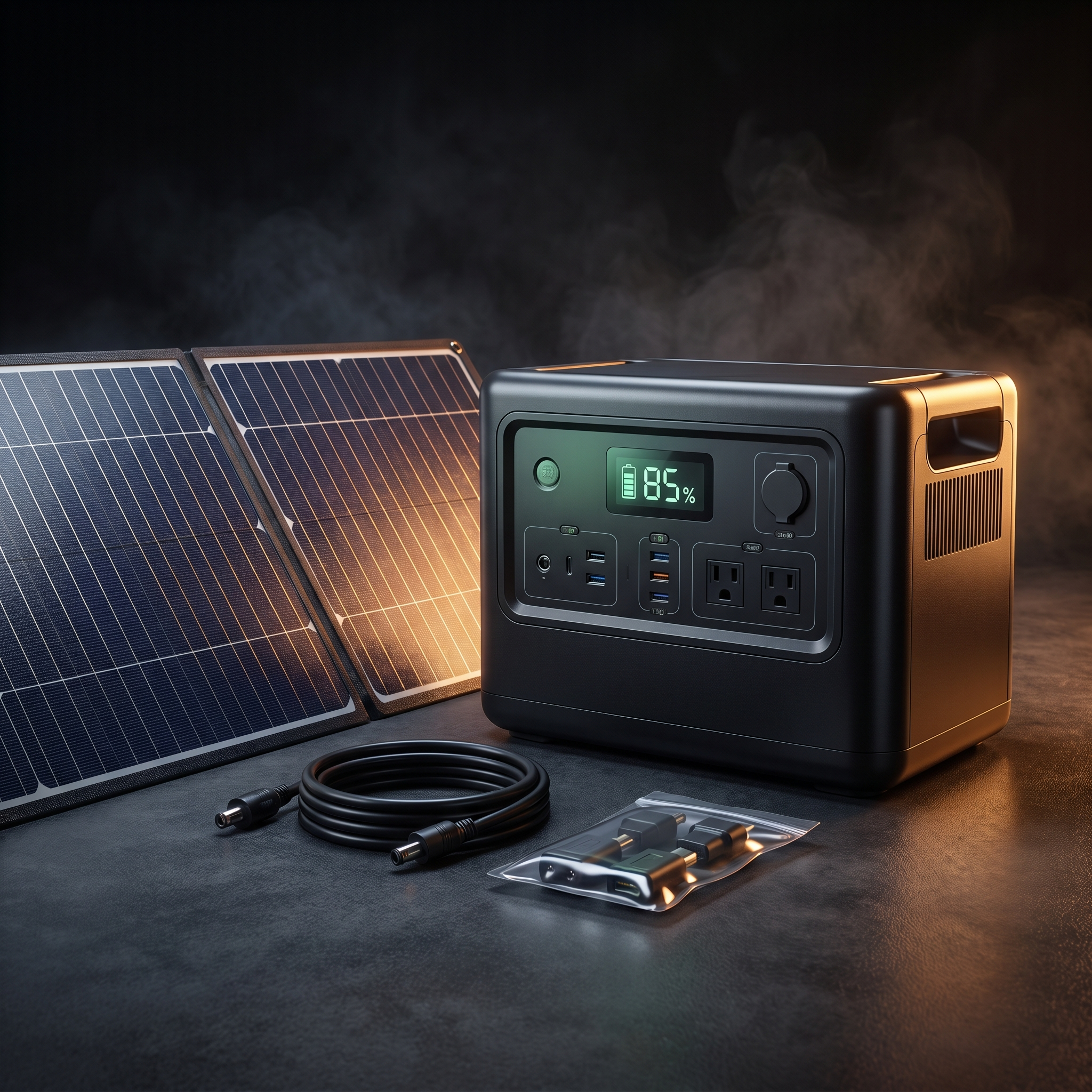
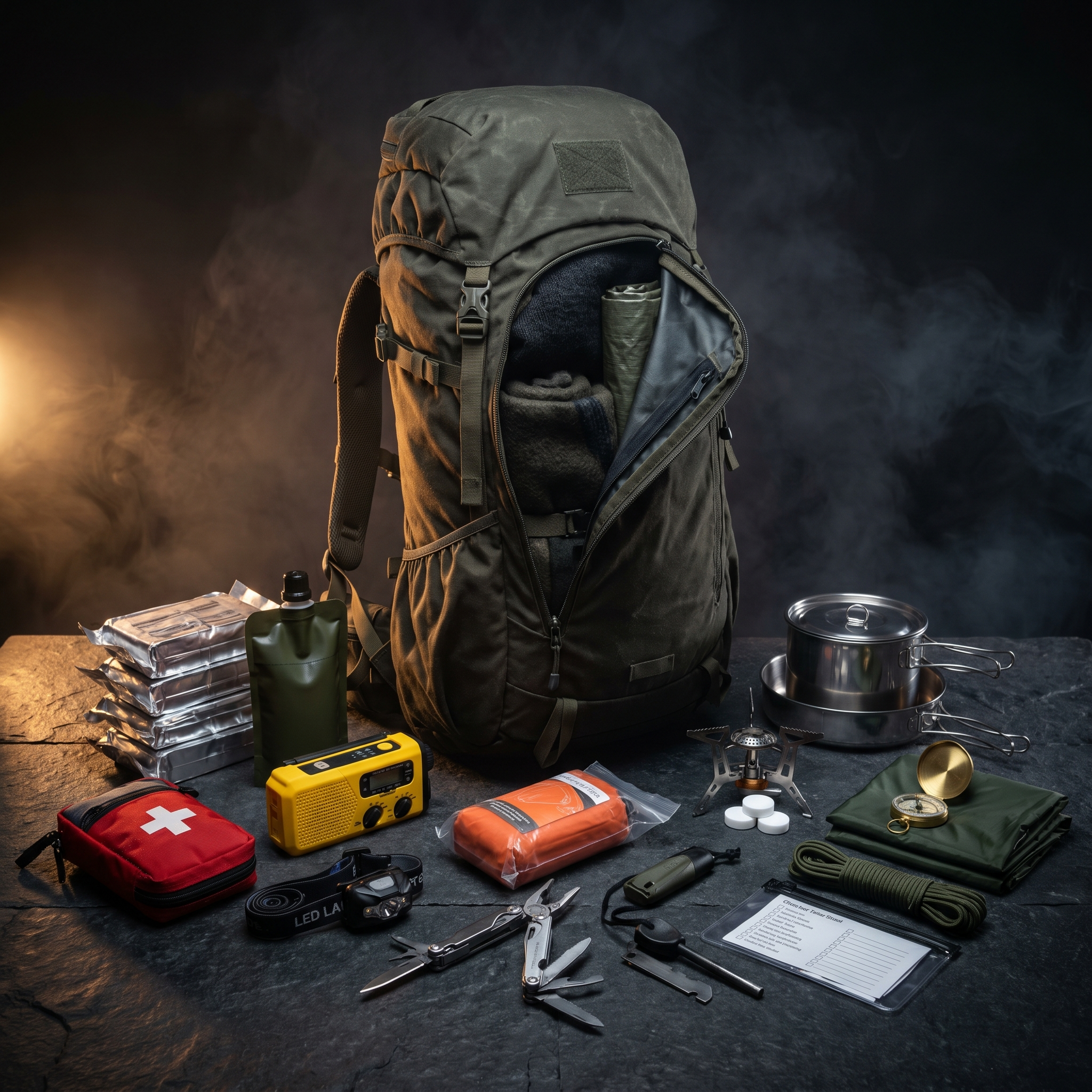
Drinking water and a way to make water drinkable. Non-perishable food that can be prepared without a stove or eaten directly. Light sources that work independently of the power grid – headlamps, flashlights, candles. A battery or crank-powered radio to receive announcements. A first-aid kit with the most important materials. And ideally, a way to power at least cell phones and small devices – such as a power bank or a portable power station.
Anyone who wants to put all this together individually can do so. The BBK checklist provides good guidance. Those who want to save themselves the effort can fall back on ready-made emergency kits that cover exactly this checklist.
What you can do now
The Berlin blackout showed that crisis preparedness is not a matter of paranoia, but of responsibility. It's not about preparing for the end of the world. It's about being able to bridge a few days without electricity, without a supermarket, and without a functioning mobile phone network – for yourself and for the people you are responsible for.
The first step is the most important: getting started. Whether with a single box of emergency rations, a water filter and a flashlight, or a complete emergency kit – the main thing is that something is ready before the next power outage comes.
Because the question is not if it will come. But when.